
A seasonal SEO calendar for contractors tells you exactly when to publish so your content is indexed and ranking before demand peaks, not after. An HVAC company publishing “AC maintenance tips” content in December is months behind the search demand. A roofer waiting until after a storm to publish storm-damage content is reacting instead of ranking. SEO takes months to build momentum, which means content has to be timed to when homeowners search, not to when the work happens.
Seasonal SEO for contractors means publishing content and running promotions 60-90 days ahead of when homeowners actually search for that service, because rankings take time to build. By the time search volume peaks, your content needs to already be ranking, not just published.
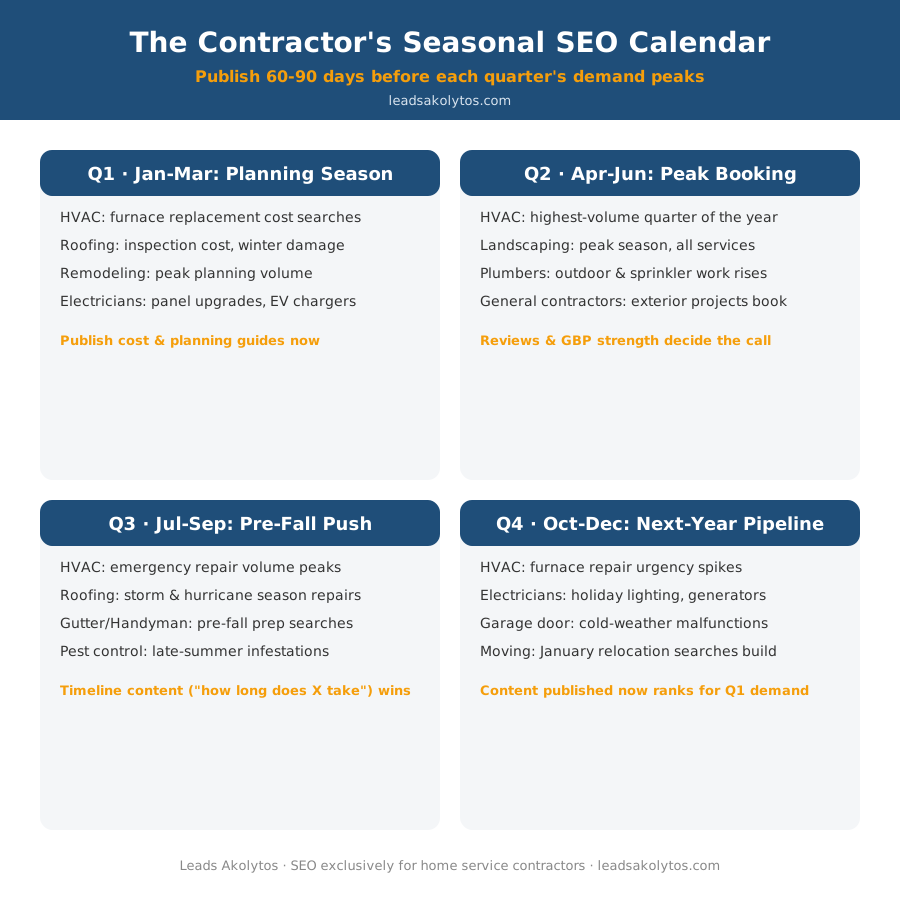
Want to use this calendar on your own site? Go ahead — just credit us. Copy this embed code:
<a href="https://leadsakolytos.com/blog/the-contractors-seasonal-seo-calendar-when-to-publish-for-every-trade/"><img src="https://leadsakolytos.com/blog/contractor-seasonal-seo-calendar-v2.svg" alt="The Contractor's Seasonal SEO Calendar by Leads Akolytos" /></a>
Q1 (January-March): Planning Season
New-year resolutions and tax refunds drive research-heavy searches across nearly every trade. Homeowners are asking cost and planning questions, not ready-to-book ones yet.
- HVAC: “furnace replacement cost,” pre-season tune-up offers ahead of summer
- Roofing: “roof inspection cost,” winter damage assessment content
- Remodeling/General contractors: peak planning volume — kitchen and bath cost guides perform best here
- Electricians: panel upgrade and EV charger installation research spikes
Building a seasonal SEO calendar for contractors around these windows keeps your content working with demand instead of against it.
Q2 (April-June): Peak Booking Season
Research is largely done. Homeowners are comparing two or three providers and checking availability. This is where Google Business Profile strength and review count decide who gets the call.
- HVAC: highest-volume quarter of the year — AC repair and installation searches spike hard with the first heat wave
- Landscaping: peak season across nearly every service line
- Plumbers: outdoor plumbing, sprinkler, and pool-related work rises alongside general spring maintenance
- General contractors: outdoor and exterior projects move into the booking phase
A seasonal SEO calendar for contractors only works if you revisit it every quarter as demand shifts.
Q3 (July-September): The Pre-Fall Push
Families want projects wrapped before school starts and holidays arrive. Timeline-driven searches (“how long does X take”) convert well here from homeowners on a deadline.
- HVAC: emergency repair volume peaks during heat waves; furnace tune-up searches begin building toward Q4
- Roofing: hurricane and storm season drives urgent repair searches in affected regions
- Gutter cleaning/Handyman: pre-fall prep searches build through September
- Pest control: late-summer infestation searches peak
Q4 (October-December): Next-Year Pipeline Season
Holiday hosting exposes what homes need. Big-ticket projects get researched now and booked in Q1 — and because SEO takes months, content published now is what ranks in time for the Q1 research wave.
- HVAC: furnace repair and replacement urgency spikes with the first cold snap
- Electricians: holiday lighting safety and generator installation searches rise
- Garage door: cold-weather malfunction searches increase
- Moving: January relocation searches begin building in November and December
The Seasonal SEO Calendar Pattern That Applies to Every Trade
Regardless of trade, the same rule holds: publish and optimize 60-90 days before your busiest search quarter. A contractor who waits until demand peaks to start their SEO push is publishing content that won’t rank until the season has already passed. The contractors who consistently win a given quarter almost always started the quarter before.
Should You Build This Calendar Yourself or Hire It Out?
| Factor | DIY | Hire an Agency |
|---|---|---|
| Time investment | 4-8 hours/month researching keywords, writing briefs, and tracking deadlines on top of running jobs | 0 hours — the agency plans and executes the calendar |
| Cost | Free, but opportunity cost of your time and any freelance writer fees | Typically bundled into a monthly SEO retainer (see our SEO pricing breakdown) |
| Risk of missing the 60-90 day window | High if you’re juggling it between jobs — the most common way contractors miss a season entirely | Low — a dedicated calendar and publishing cadence is the agency’s job to keep on track |
| Best fit | Contractors with in-house marketing help or a content-savvy office manager | Owner-operators who need this handled without adding it to their own plate |
If you decide to hire this out, ask any prospective SEO company to show you last year’s actual publishing calendar for a client in your trade — not a template. If they can’t produce one, see our guide to vetting an SEO contractor before you sign anything.
Sticking to a seasonal calendar only pays off if what you publish is genuinely worth reading — see our guide on what authoritative content creation costs for a contractor business for what that actually takes.
When Your Season Breaks Pattern: Adapting the Calendar
A seasonal SEO calendar for contractors assumes a typical year, and no year is typical. An unusually mild winter, a storm that reshapes six weeks of demand, or a large commercial contract that eats your capacity will all pull your actual season away from the schedule. Here is how to adapt without abandoning the plan.
Keep publishing on schedule even when demand shifts. The reason to publish ahead of a season is that ranking takes time. If demand arrives early, the content you published on schedule is what catches it. Skipping a publishing window because you are currently busy is the most expensive decision in this entire calendar, because the cost lands in the slow month rather than the busy one.
Move the topic, not the date. If a storm shifts demand toward emergency repair work, write the emergency repair piece in the slot you had already reserved for something else. You keep the cadence, which is what compounds, and you gain relevance to what people are actually searching for this month.
Let your own booking data override the general calendar. A seasonal SEO calendar for contractors published by anyone else is an average. Your calendar should be built from your own last two or three years of job records. If your quiet month is February rather than January, publish accordingly and ignore the generic version.
Build a small buffer of evergreen pieces. Keep two or three finished articles that are not tied to a season. When a genuinely chaotic month arrives and nobody has time to write, you publish one of those instead of publishing nothing. Cadence survives, which is the whole point.
Review the calendar once a year, not once a month. Constant tinkering makes it impossible to tell whether the plan worked. Run it for a full cycle, compare the traffic and calls in each season against the previous year, then adjust the windows that clearly did not fit your trade or your region.
The calendar is a planning tool, not a contract. Its value is that it forces the decision about what to publish to happen months before the month in which you need the result.
Seasonal SEO Calendar Timing Mistakes That Cost Contractors the Season
Building a seasonal SEO calendar for contractors is only half the job — the other half is publishing on the actual lead time Google needs, not the calendar date the work happens. Two mistakes show up in almost every trade.
Publishing when the work starts, not when the search starts. Homeowners research furnace tune-ups in September, not January when the furnace is already broken and the search intent has shifted from planning to emergency. A seasonal SEO calendar for contractors has to be built around when people start searching, which is consistently weeks to months ahead of when they actually book the job, not around the contractor’s own internal scheduling.
Treating every trade’s calendar as identical. Roofing, HVAC, remodeling, and plumbing all have different lead times between first search and booked job, and a seasonal SEO calendar for contractors that copies a generic template across every trade wastes the publishing slots that actually would have mattered. A roofer’s storm-season spike needs content live before storm season, not during it — by the time the storms hit, the search competition from every other roofer in the market has already caught up.
Publishing the same seasonal content year after year without refreshing it. A seasonal SEO calendar for contractors that never gets revisited starts losing ground to competitors who update their seasonal pages with the current year’s pricing, availability, and service details. Refreshing the modified date on seasonal content ahead of its next peak window, not just leaving it untouched from the year before, is part of running the calendar properly rather than just building it once.
A Sample Seasonal SEO Calendar Grid by Trade
Turning the pattern above into something you can actually copy is the point of building a seasonal SEO calendar for contractors in the first place. Below is a simplified grid showing when four common trades should have seasonal content live, based on the lead-time logic already covered — publish weeks to months before the search volume itself peaks, not when the job actually gets booked.
| Trade | Publish By | Search Peak | Booking Peak |
|---|---|---|---|
| HVAC (cooling) | February | April-May | June-July |
| HVAC (heating) | August | September-October | November-December |
| Roofing (storm-related) | February | March-May | May-August |
| Remodeling | November | January-February | March-June |
| Plumbing (winterization) | September | October | November |
This is a starting grid, not a rigid schedule — your own seasonal SEO calendar for contractors should be adjusted based on your specific service area’s climate and your own historical booking data if you have it, which is almost always more accurate than a generic regional pattern.
How to use this grid without a marketing team. Pick your trade’s row, set a calendar reminder for the “Publish By” month, and treat that as the deadline for either publishing new seasonal content or substantially refreshing last year’s version with current pricing and availability. A seasonal SEO calendar for contractors doesn’t need to be complicated to work — it needs to be consistently followed months ahead of the actual demand spike, which is the single detail most contractors get backwards when they try to run one without outside help.
Why the lead time matters more than the content itself. Google needs time to crawl, index, and start ranking new or refreshed content before it can show up for seasonal searches — publishing a seasonal SEO calendar for contractors entry the same week demand peaks means the page is still working its way into rankings after the season is already over. This is the single most common reason seasonal content underperforms even when the writing itself is solid.
Frequently Asked Questions About the Seasonal SEO Calendar for Contractors
How far ahead should I really be planning content?
A good seasonal SEO calendar for contractors builds in 60-90 days minimum for competitive keywords. If your trade’s peak season is summer, your strongest content push should happen in late winter and early spring.
What if my trade doesn’t fit neatly into one season?
Most trades have a dominant season but steady year-round demand underneath it. Emergency services (plumbing leaks, electrical issues) should maintain always-on content regardless of season, layered with seasonal pushes for the predictable spikes.
Does this apply to Google Business Profile activity too, not just blog content?
Yes. Photos, posts, and review requests should also ramp up ahead of your peak season, not during it, since profile activity and reviews take time to accumulate and influence ranking.
A predictable publishing rhythm is one piece of a bigger goal — see how it helps break the feast-or-famine cycle for good.
Get a Seasonal SEO Calendar Built and Managed for Your Trade
Leads Akolytos builds trade-specific content calendars for electricians, HVAC, plumbers, roofers, general contractors, landscapers, and more — timed to when your homeowners actually search. No contracts, plans start at $1200/month.
Book a Free 30-Minute Strategy Call →
Timing your content calendar matters even more now that homeowners are asking ChatGPT and Google’s AI Overviews seasonal questions directly — see how AI search is already sending contractors leads (or costing you some) for what these tools pull from when they answer.
If keeping up with a publishing calendar like this one feels like more than you can take on in-house, read our guide on whether to hire an SEO contractor or go DIY.
Is it worth paying an agency to manage my seasonal SEO calendar?
If missing the 60-90 day window has cost you a season before, yes — the ongoing cost of a retainer is usually smaller than the lost bookings from publishing too late. If you have the in-house time and discipline to hit the same deadlines yourself, DIY can work; the deciding factor is whether the calendar will actually get followed under real workload, not whether you understand the concept.
Building a seasonal SEO calendar for contractors is not a one-time task — revisit it each quarter as your trade’s demand curve shifts, and adjust publish dates if a storm, cold snap, or local building code change moves the buying window earlier than usual.
Building Your Own Seasonal SEO Calendar
The point of a seasonal SEO calendar for contractors isn’t a rigid template, it’s a habit: publish ahead of demand, not during the rush when you have no time to write. Pin your seasonal SEO calendar for contractors to your actual trade’s booking cycle (roofing storms, HVAC summer/winter swings, plumbing freeze season) rather than a generic content calendar built for a different industry.
What to Do When Your Seasonal SEO Calendar for Contractors Slips
Every contractor eventually misses a publish date. A busy install week eats the afternoon you set aside to write, and suddenly the article meant to run six weeks ahead of peak season goes out two weeks ahead instead. A slipped seasonal SEO calendar for contractors is not a wasted effort — it still helps, just with a shorter runway for Google to index and rank the page before demand peaks.
The fix is not to skip the piece and wait for next year. Publish it anyway, then adjust two things: trim the piece toward the fastest-converting sections first (pricing, vetting, and booking-decision content) since a late post has less time to rank organically and needs to work harder on the traffic it does get, and flag the date gap in your own tracker so next year’s seasonal SEO calendar for contractors moves that specific article two to three weeks earlier. Trades with the shortest booking windows — storm-driven roofing work and freeze-driven emergency plumbing — lose the most value from a late seasonal SEO calendar for contractors, since their entire demand spike can be over in days.
Treat missed dates as data, not failure. A seasonal SEO calendar for contractors that gets revised every year based on what actually slipped is more useful than one written once and never touched again.
How to Sanity-Check Your Seasonal SEO Calendar for Contractors Before You Commit Budget
Before locking in dates on a seasonal SEO calendar for contractors, run a quick gut-check against your own job history: pull last year’s booking dates from your CRM or invoicing tool and see when calls actually started climbing, not when you assumed the season began. Regional weather and local permitting timelines shift the real start of demand by two to four weeks in either direction depending on where you operate.
A seasonal SEO calendar for contractors built only from generic industry averages will consistently publish a little late for trades with sharp regional swings. Cross-check the calendar once a year against your own closed-job dates, not just once when you first build it, and treat the seasonal SEO calendar for contractors as a living document tied to your actual pipeline rather than a fixed annual template.
Want this handled for you?
We do this work for home service contractors every day, month-to-month, with no contracts. Book a free 30-minute call and we'll show you where you stand on Google.
Book my free call