![The Real Cost Per Lead: SEO vs. Paid Ads for Home Service Contractors [2026 Numbers]](/blog/auto/real-cost-per-lead.svg)
The real cost per lead for contractors comes down to one question: should the marketing budget go to Google Ads or SEO? Every contractor asks some version of the same question: should the marketing budget go to Google Ads or SEO? The honest answer is that they solve different problems, but the cost math between them is often misunderstood — and understanding it changes how you should be spending.
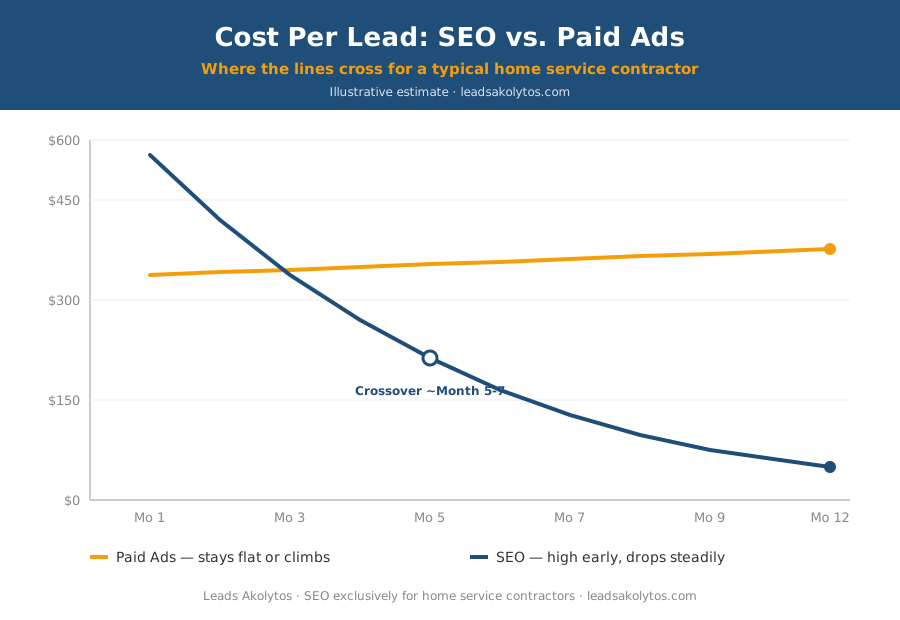
Paid ads buy leads for as long as you keep paying, with cost per lead that stays roughly flat (or rises with competition) month over month. SEO — built on fundamentals Google itself documents — has a higher upfront cost per lead in the first few months while rankings build, then the cost per lead drops steadily as traffic becomes free — often ending up a fraction of paid ad costs within a year.
What Contractors Actually Pay for Paid Ads Right Now
Google Ads cost per click for competitive home service keywords like “emergency plumber” or “AC repair near me” commonly runs $15-$60+ depending on your market — worth checking whether operational leaks are wasting those clicks before raising that ad budget further —, with the most competitive urban metros pushing even higher. Not every click converts to a lead, and not every lead converts to a booked job — so real cost per booked job through paid ads alone frequently lands well into the hundreds of dollars, sometimes more in high-competition trades like HVAC and roofing.
That cost doesn’t go down over time. If anything, it tends to creep up as more contractors bid on the same keywords. The moment you pause the campaign, the leads stop the same day.
What SEO Actually Costs, Month by Month
SEO works on a completely different curve. In the first 60-90 days, you’re paying for the work — content, technical optimization, Google Business Profile management, backlinks — with little to show in rankings yet. Cost per lead during this window can look expensive because there are few leads to divide the cost by.
By months four through six, rankings for lower-competition keywords typically start moving, and organic leads begin arriving without an equivalent per-click cost. By month nine to twelve, a contractor with consistent SEO work is often generating a meaningful share of monthly leads from organic search and Map Pack visibility — leads that don’t stop the day you’d consider pausing spend, because rankings persist.
The Real Comparison Isn’t Either/Or
The contractors who scale fastest typically run both, but understand the different job each one does:
- Paid ads are a fast, flexible way to fill immediate gaps — a slow week, a new service you want to test, a new city you’re expanding into
- SEO is the compounding asset — the leads it produces in month 18 cost less per lead than the leads it produced in month three, and it keeps paying off even in months you don’t spend extra
A contractor relying entirely on paid ads never escapes the treadmill: pause spend, leads stop. A contractor who builds SEO alongside ads gradually shifts more of their lead volume onto the channel that doesn’t require a bigger check every month to sustain it.
Cost Per Lead for Contractors: What This Means for Budget Allocation
If cash flow allows only one channel today, the right choice depends on urgency. A contractor who needs jobs booked next week needs paid ads. A contractor thinking six months and beyond should be building SEO now, because the lag time between starting and seeing meaningful organic leads means every month of delay pushes the payoff further out.
Most established contractors we work with eventually run a modest, always-on ad budget for immediate demand alongside ongoing SEO for the channel that keeps getting cheaper per lead the longer it runs.
Frequently Asked Questions
How long before SEO leads cost less than paid ad leads?
Most contractors see the crossover somewhere between month six and twelve, depending on how competitive their market and trade are. Lower-competition trades and smaller metros often see it sooner.
Should I stop paid ads once SEO starts working?
Not necessarily. Many contractors keep a smaller, more targeted ad budget running for immediate demand while SEO handles a growing share of steady, lower-cost lead volume.
Why does SEO cost more per lead in the first few months?
You’re paying for the work (content, technical fixes, Google Business Profile management, backlinks) before rankings have moved enough to generate significant lead volume. The cost per lead only looks high because the lead count is still low — it drops steadily as rankings build.
If you are specifically weighing Google Local Services Ads against organic SEO, we break down which one to invest in first in more detail.
Cost per lead is one half of the equation — the other is volume. See how many leads a contractor should realistically expect from SEO for a market-specific way to estimate that number.
Want a Straight Answer on Where Your Budget Should Go?
At Leads Akolytos, we work exclusively with home service contractors and we’ll tell you honestly whether SEO, ads, or both make sense for where your business is right now. No contracts, plans start at $1200/month.
Book a Free 30-Minute Strategy Call →
Curious how long it takes for that SEO cost-per-lead curve to actually bend downward? Our guide on how long SEO takes to work for a contractor business lays out a realistic month-by-month timeline.
What the Real Cost Per Lead Actually Looks Like
The real cost per lead only becomes clear after you track a full sales cycle, not just the ad spend or SEO retainer itself. Contractors who calculate their real cost per lead across both paid and organic channels usually find organic pulls ahead after month six.
Bottom line: once you calculate the real cost per lead for contractors across both channels, the winning mix is rarely all-or-nothing — it is usually SEO for compounding volume and paid ads for immediate gaps.
Tracking cost per lead for contractors monthly, not just quarterly, catches a channel drifting upward before it eats the whole marketing budget — a habit worth building into any SEO vs. paid ads comparison.
A Simple Way to Check Your Real Cost Per Lead
To find your real cost per lead, divide last month’s total marketing spend (SEO retainer plus any ad spend) by the number of qualified leads it produced. For example, if a $2,500 monthly SEO investment generated 20 qualified leads, that is $125 per lead — compare that figure against your current paid-ads cost per lead to see which channel is actually winning on a dollars-per-booked-job basis, not just clicks.
However, this is not a decision to run on a spreadsheet alone. Also check how many of those leads from each channel actually convert to booked jobs, since SEO traffic tends to skew toward higher-intent searchers who are further along in the buying decision, which usually improves the true cost per lead for contractors once close rate is factored in.
Cost Per Lead for Contractors by Trade
Cost per lead for contractors varies noticeably by trade: emergency-driven trades like plumbing and HVAC repair tend to see lower SEO cost per lead once rankings mature, since branded and near-me searches convert at a high rate, while remodeling and roofing replacement jobs often carry a longer research phase before the lead ever calls.
If you’re still weighing which channel to prioritize with your first dollars, our full breakdown of PPC vs SEO for contractors walks through the sequencing decision in more depth, including when it makes sense to run both at once.
Frequently Asked Questions About the Real Cost Per Lead
What is a good cost per lead for contractors?
The real cost per lead for contractors typically runs $50-$300 depending on trade and channel, with SEO leads usually settling lower than paid-ads leads once a campaign has been live for 6+ months.
Does SEO cost per lead really get cheaper over time?
Yes — unlike paid ads, where cost per lead stays roughly flat as long as you keep paying, SEO cost per lead trends down over time because rankings earned months ago keep generating leads without new spend.
For a neutral, non-vendor breakdown of how marketing channel costs get measured, Search Engine Journal’s SEO industry coverage is a useful outside reference point when you’re validating your own cost per lead for contractors against industry norms.
Wondering how much to actually budget? See our realistic contractor SEO budget and year-one ROI timeline.
How do you know if you’re actually getting the real cost per lead you think you are? Pull your ad platform’s cost report and your CRM’s source-tagged lead count side by side each month. Contractors chasing the real cost per lead number in isolation, without checking close rate by source, often overspend on the channel that looks cheapest per lead but converts worst. The real cost per lead only matters once you multiply it by close rate to get a true cost per booked job — that’s the number that should drive next month’s budget split, not the raw lead price alone.
A Worked Example: Comparing Real Cost Per Lead Across Two Channels
Say a plumbing contractor spends $2,000 a month on paid search and gets 40 leads — a $50 real cost per lead on paper.
The same month, their SEO content and Google Business Profile generate 25 organic and map-pack leads at effectively no incremental spend beyond the retainer, which nets out closer to $28 in real cost per lead once you divide the monthly SEO fee across just those leads.
The mistake most contractors make when comparing real cost per lead figures is stopping there. If the paid leads close at 30% and the organic leads close at 45% because they arrive with higher intent, the true real cost per lead per booked job flips the comparison entirely in SEO’s favor.
This is why any real cost per lead comparison that ignores close rate by source is incomplete. Pull both numbers before deciding where next month’s budget goes. If a chunk of your paid spend is going to a pay-per-lead marketplace rather than search ads, see our breakdown of pay-per-lead vs. SEO for contractors for the shared-lead math that applies specifically to that model.
Recalculating Your Real Cost Per Lead Every Quarter
Your real cost per lead isn’t a number you calculate once and file away — ad prices rise, SEO compounds, and your real cost per lead from six months ago may not reflect what you’d pay today. Rerun the math every quarter: total spend divided by total leads from that specific channel, tracked separately for SEO and paid ads so you can see the real cost per lead trend in each, not just a blended average that hides which channel is actually working.
Watch the trend line, not the single number. A real cost per lead that’s rising for paid ads while falling for SEO is a signal to shift budget, even if both channels are still technically profitable today.
Want this handled for you?
We do this work for home service contractors every day, month-to-month, with no contracts. Book a free 30-minute call and we'll show you where you stand on Google.
Book my free call