Residential construction marketing gets a lot easier when the area around you is already heating up with interest. When a big project lands in your city, like a new subdivision, a mixed-use complex, a hospital, or a highway exit, people start searching for homes, upgrades, and repairs long before the paint dries. If your business is ready when that wave hits, you can turn those searches into steady work instead of waiting and hoping for calls.
This article walks through how home builders, remodelers, and home service contractors can spot these projects early, line up their marketing with each phase, and pull in high-quality leads from a tight local radius. We will also look at the simple SEO steps and seasonal campaigns that keep your phone ringing, even when other contractors are slowing down.
Turning Big Local Projects Into Lead-Generation Engines
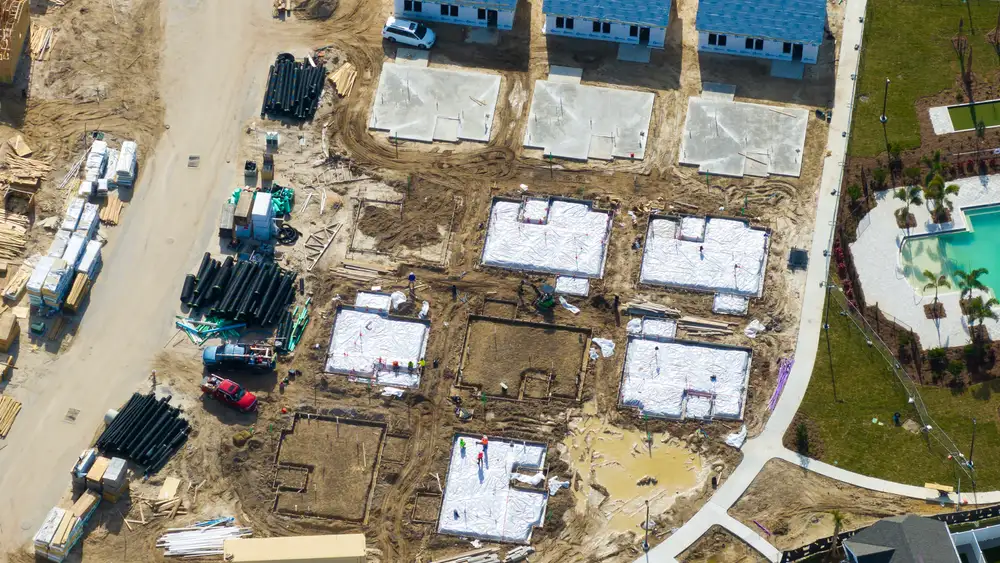
Think about what happens when a new subdivision or large complex gets announced in your area. People start asking questions. They search for where to live nearby, how traffic will change, what schools are close, and what it might do to home values. That curiosity often turns into action.
Big projects can:
- Change search patterns within 10 to 30 miles
- Push people to move closer to work or family
- Spark interest in building new homes or remodeling older ones
- Increase demand for home services like HVAC, roofing, and landscaping
When new people move into a community, they rarely stop at unpacking. Many want basement finishes, fences for pets, decks, fresh kitchens, and better bathrooms. Contractors who plan their marketing around these project timelines are the ones who win the winter and early spring leads while everyone else is still waking up from the slow season.
Spotting the Right Local Projects Before Your Competitors
You cannot plan around projects you do not know about. The good news is that most big developments are public long before dirt starts moving. You just need a simple system to keep an eye on what is coming.
Start by checking:
- City planning and zoning board agendas
- Transportation and DOT project announcements
- News about large employer relocations or new plants
- Residential subdivision and apartment approvals
Not every project is worth your time. If you are a custom home builder, you may care more about higher-end subdivisions or mixed-use communities. Kitchen and bath remodelers might focus on older neighborhoods near a new hospital or office hub, where long-time residents may finally update their homes.
Three questions sort the list quickly:
- Timeline: how soon will people move in?
- Demographics: are these starter homes, luxury builds, or rentals?
- Commuting: will people be driving through your service area every day?
To keep it simple, build a basic local project radar. Once a month, check public notices, skim local news, and set a few Google Alerts like "new development" or "[County] subdivision approval." Then add some real-world networking by talking to real estate agents, lenders, and chamber of commerce contacts. They often know what is coming before it hits the news.
Aligning Your Marketing With Project Timelines
Once you spot a project that fits your niche, tie your marketing calendar to its phases. Most big jobs move through clear stages: announcement, groundbreaking, vertical construction, and move-in. Each stage is a chance to show up in front of the right people.
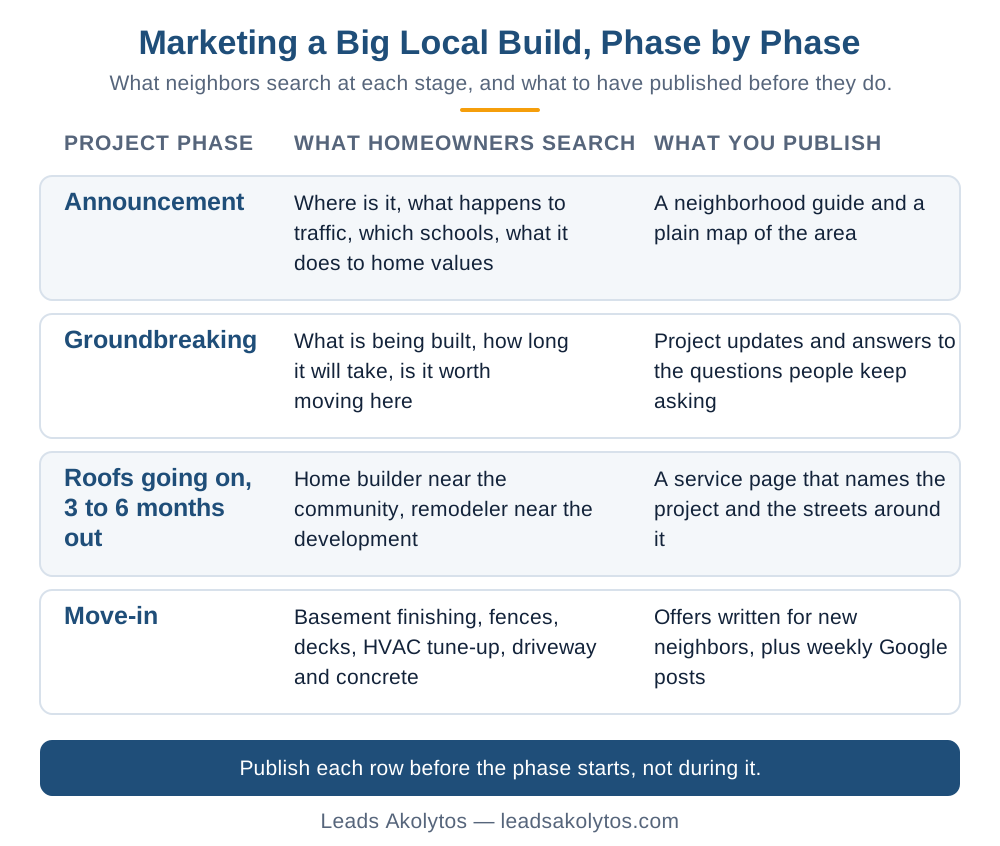
During the announcement and early groundbreaking, you are answering questions rather than selling:
- Write neighborhood and community guides that answer what people keep asking
- Share content about living near the new project and what to expect
- Post updates and simple maps that help people understand the area
As vertical construction picks up and you see roofs going on, it is time to get more direct. About three to six months before move-ins, add or update pages on your site that target phrases like "home builder near [New Community]" or "remodeling near [New Development]." The same goes for service contractors: "HVAC service in [Neighborhood]" or "roofing near [Project Name]." Our guide to local SEO assets for builders covers how to build those pages once and reuse them.
When people start moving in, your messaging should speak to fresh pain points:
- Basement finishes and bonus rooms for growing families
- Driveways, concrete, and walkways for safety in wet or icy seasons
- Fences, decks, and patios for spring and summer
- HVAC tune-ups and insulation checks before the real cold hits
- Holiday-ready kitchens and bathrooms for hosting visitors
If your content, pages, and offers are ready before the moving trucks roll in, your business feels like the natural local choice rather than a name someone has to go looking for.
Hyper-Local SEO Plays That Capture High-Intent Searches
Big projects come with names, and people search those names a lot. This works best when your SEO lines up with how real people talk about the area.
On your Google Business Profile and website, work in natural references to:
- The project name
- Nearby landmarks, like a new hospital or stadium
- Neighborhood nicknames or school zones
Content ideas that tend to work:
- "What to know before moving to [New Community]"
- "Best home upgrades near [New Development]"
- "Remodeling older homes around [Project Name]"
Describe the area factually. Write about working near a development, not for it, unless you really are on the builder's list. For local authority, think partnerships instead of random links: share useful guides with local real estate offices, offer helpful posts to neighborhood and HOA newsletters, join community Facebook groups with honest tips, and connect with local bloggers covering housing and growth. Those mentions tell Google you are part of the area, not a name on a long contractor list. Weekly Google posts keep the same signals fresh.
Turning Seasonal Shifts Into Marketing Momentum
When temperatures drop and days get shorter, many contractors slow their marketing. At the same time, homeowners sit inside, notice every flaw, and start planning projects for next year. That gap is your chance.
If a big project is bringing new neighbors into your market, think about seasonal campaigns like:
- Winterization packages for homes in or near the new community
- Pre-holiday kitchen and bath updates for recent move-ins
- Early-bird deck, patio, or outdoor living bookings for spring
Use paid search and social ads to stay in front of people who visited your site or read your content about the new project. Even if they are not ready right away, steady reminders through winter keep your name in mind when they finally say, "okay, let us start this." There is more on this in our guide to year-round residential construction marketing.
Putting Local Project Power to Work for Your Pipeline
When you line up your marketing with major local projects, your lead flow becomes less random. Instead of hoping for calls, you tap into predictable waves of interest every time a new development, plant, or subdivision lands in your area.
A simple starting plan: pick one upcoming project, create one hyper-local page focused on that project and the neighborhoods around it, then run one targeted campaign before the year wraps up. Repeat it each time a new project is announced and you have a system that feeds the pipeline instead of a scramble. If you are not sure which channel is earning the work, our guide to construction marketing attribution shows how to tell.
Frequently Asked Questions
How early should I start marketing around a new development?
Start publishing area content as soon as the project is approved and in the news, because that is when the searching starts. Save the direct service pages for three to six months before the first move-ins, when people begin looking for contractors rather than information.
Can I name the development on my website?
Yes, as long as you describe it accurately. Write about serving homeowners near the community, and do not imply you built it, are approved by the builder, or are the official contractor for it unless that is true.
What if the big project is 20 miles away?
It can still be worth it if people will commute through your service area or if it pulls buyers toward the towns you cover. If it sits outside the radius you actually drive to, put the effort into a closer project instead.
Does this work for home service contractors, not just builders?
Yes, and often faster. New move-ins need HVAC service, roofing checks, fencing, landscaping, and concrete within the first year, usually before they take on a large remodel.
Get More Qualified Homeowner Leads Starting This Month
If you are ready to turn more local homeowners into booked projects, our team at Leads Akolytos can build a residential construction marketing plan around your market, your services, and your budget. We keep the tracking clear, so you always know which channels are actually driving calls and estimates. Contact us to talk through your area and the kind of lead flow you want.
If you'd like one practical idea like this in your inbox each month, get The Leads Akolytos Monthly: one email a month, unsubscribe any time.
Want this handled for you?
We do this work for home service contractors every day, month-to-month, with no contracts. Book a free 30-minute call and we'll show you where you stand on Google.
Book my free call